
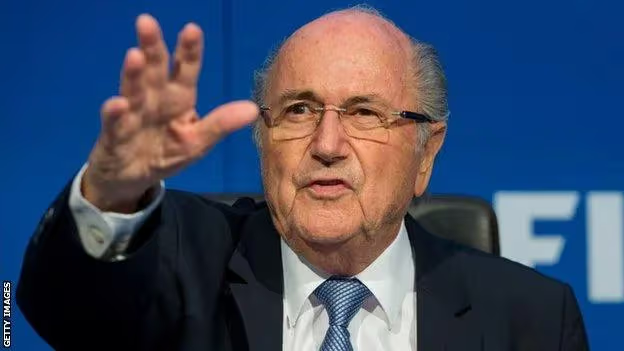
Former FIFA President Sepp Blatter has expressed support for calls to boycott the FIFA World Cup, reigniting global debate over the tournament’s governance, ethics, and wider impact on football.
Speaking in a recent interview, Blatter suggested that a boycott could serve as a powerful tool to push for reforms within world football, particularly in relation to transparency, human rights concerns, and the commercial direction of the game.
“A boycott is one of the strongest messages football stakeholders can send,” Blatter said. “It forces decision-makers to reflect and take responsibility for their actions.”
Blatter, who led FIFA for nearly two decades before stepping down in 2015 amid corruption scandals, acknowledged that such actions would not be easy and could have serious sporting and economic consequences. However, he argued that meaningful change sometimes requires difficult decisions.
The former FIFA boss also criticised what he described as the growing politicisation and commercialisation of the World Cup, warning that the tournament risks losing its core football values if reforms are not pursued.
His comments come amid ongoing discussions by activists, fan groups, and some political leaders who have raised concerns about World Cup hosting processes, governance standards, and ethical considerations surrounding major tournaments.
FIFA has not officially responded to Blatter’s remarks, but the organisation has consistently maintained that the World Cup should remain inclusive and separate from political disputes.
Blatter’s stance has divided opinion within the football community, with some supporting his call for accountability, while others argue that boycotts unfairly punish players and fans.
As the debate continues, the former FIFA president’s comments have once again placed global football governance under intense scrutiny.